
Service · Tint
Ceramic Tint Houston.
Ceramic film blocks infrared heat and UV without the signal interference of metallic tint or the purple fade of cheap dyed film. In a Houston summer that's a measurably cooler cabin and an interior that doesn't bake.
Why window tint is not optional in Houston
Houston sits at roughly 29 degrees north with humidity that turns a 95-degree afternoon into something closer to 105. A car parked outside for an hour reaches interior temperatures well past what's comfortable and well past what's good for the materials inside it. Tint is the cheapest intervention that actually changes that number.
The effect compounds over years. Ultraviolet light is what cracks a dashboard, fades a leather seat from black to grey, and yellows the plastic on your interior trim. Quality film blocks essentially all of it. The car you sell in five years looks like a car that lived in a garage, because as far as its interior is concerned, it did.
Then there's the part you notice on day one: the air conditioning stops fighting a losing battle. Less solar load through the glass means the cabin cools faster and holds temperature, which on an electric vehicle shows up directly as range you didn't spend on climate control.
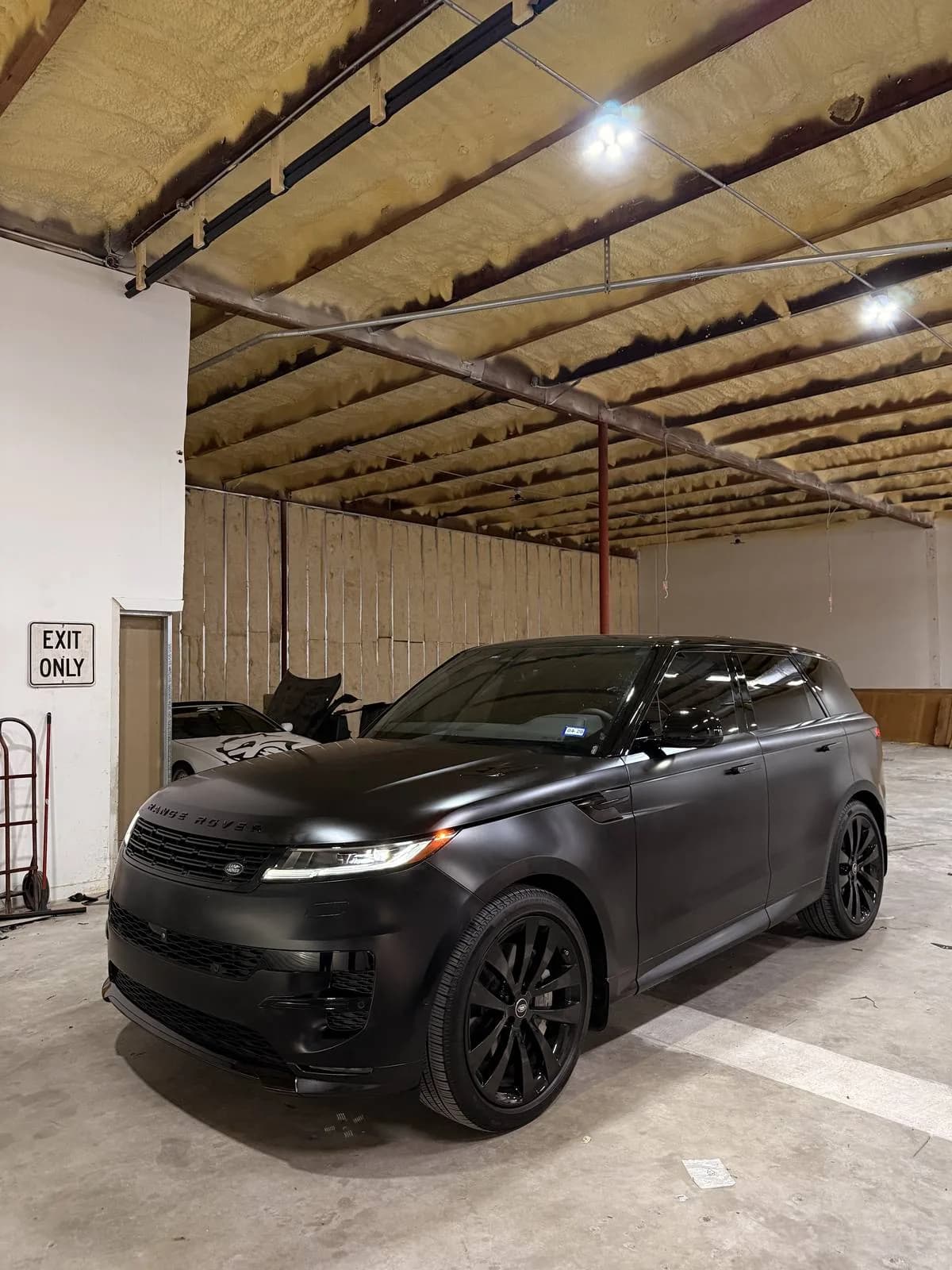
Ceramic, dyed, and metallic — the difference that matters
Dyed film is the cheap option and it works by being dark. It blocks visible light, does very little about infrared heat, and it fades. The purple-tinted windows you see on older cars are dyed film at the end of its life. If the goal is privacy on a budget it does the job; if the goal is a cooler car, it mostly does not.
Metallic film rejects heat properly by reflecting it, but it does so with a layer of metal particles in the film. On a modern car that runs cellular, GPS, satellite radio, tire-pressure sensors, and in many cases a key card or phone-as-key through the glass, a conductive layer across every window is a real and recurring problem.
Ceramic film uses non-conductive ceramic particles instead. It rejects a large share of infrared heat without darkening the glass more than you want, without interfering with a single antenna, and without fading. It costs more than dyed film. It is the only one of the three we recommend, which is why it's the only one we install.
What's legal in Texas
Texas allows 25% VLT or lighter on the front side windows, meaning at least a quarter of visible light has to get through. Rear side windows and the back glass can go as dark as you like on most vehicles. The windshield can take film below the AS-1 line — the small marking near the top of the glass — or the top five inches if there's no AS-1 marking.
A clear or very light ceramic film across the full windshield is legal in many configurations and is the single biggest heat improvement available on a car, because the windshield is the largest piece of glass pointed at the sun. We'll walk you through exactly what applies to your vehicle rather than talking you into a shade that gets you a ticket.
Medical exemptions exist for drivers with documented photosensitivity. If that applies to you, bring the paperwork and we'll work to it.
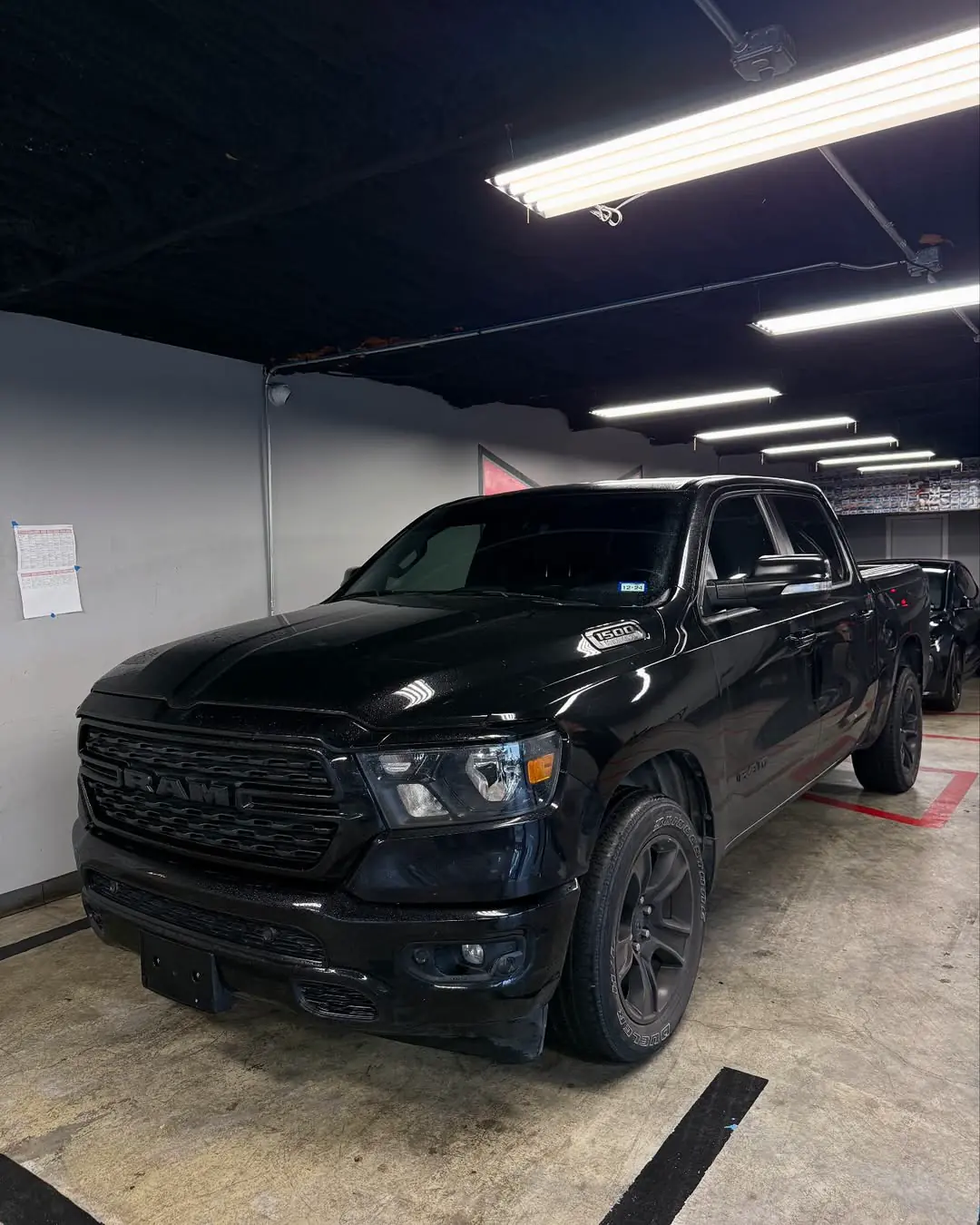
How we install it
Film is computer-cut from a pattern for your exact year, make, and model. Nothing is cut on the car, which means no blade ever goes near your glass, your rubber seals, or the defroster lines printed on your rear window — the most common and most expensive damage a careless tint job causes.
Glass is cleaned and scraped down to a genuinely clean surface first, because every speck of dust left behind becomes a permanent bump under the film. Installation happens in a controlled bay rather than an open lot, so airborne fibres aren't landing on wet adhesive.
Old film gets removed properly when there is any — steamed off and the adhesive fully cleaned rather than scraped and covered over. Most tint jobs are a same-day service; a full car with a windshield takes longer.
Afterwards the film needs three to five days to cure. Leave the windows up during that window. A little haze or a few small water pockets in the first days are normal and clear on their own as the moisture evaporates.
How it goes
Questions
How much heat does ceramic block?→
Good ceramic film rejects a large share of infrared heat. The difference you feel on your arm at a stoplight versus dyed film is obvious.
Is ceramic worth it over dyed tint?→
For Houston heat, yes. Dyed film darkens but does little for heat and fades over time; ceramic holds colour and rejects IR.
Will it turn purple?→
No. Purple fade is a hallmark of cheap dyed film. Ceramic keeps its colour.
What's legal in Texas?→
Texas allows 25% VLT on front side windows and any darkness below the AS-1 line on the windshield. We'll keep you legal and tell you the trade-offs.
When can I roll the windows down?→
Give the film 3-5 days to cure before lowering windows so the edges set fully.